

Hydrogen Systems
Model hydrogen production, storage, conversion and consumption to evaluate integrated energy concepts and control strategies.
Reliable, easy-to-use dynamic simulation for connected energy systems — proven in commercial and industrial engineering projects for more than 15 years.
Simulation Library
GreenCity is your simulation library for energy systems interaction in Modelica-SimulationX. It is the tool for energy engineers to understand, analyze and test their designs.
With power plants, storage and distribution systems and consumers, it contains all the models you need. Use this power to dynamically simulate the system concept and energy management algorithms.
Ready-to-use, flexible and extensible.
Benefits
Significantly speed up your planning process with GreenCity. Develop efficient and reliable system designs. Control your investment and operational costs.
Simulation Models
The GreenCity Library contains our technical know-how and more than 15 years of experience in energy systems simulation. We continuously improve it to provide the best results for state-of-the-art consulting to our customers.
GreenCity
GreenCity extensions provide a more detailed evaluation of specific energy systems for your use cases. Many customers also use private extensions that cover their specialized tasks and intellectual property.
Practical and Extensible
The practical application of the GreenCity Library means that it is constantly reviewed and tested by trained engineers.
Use Cases
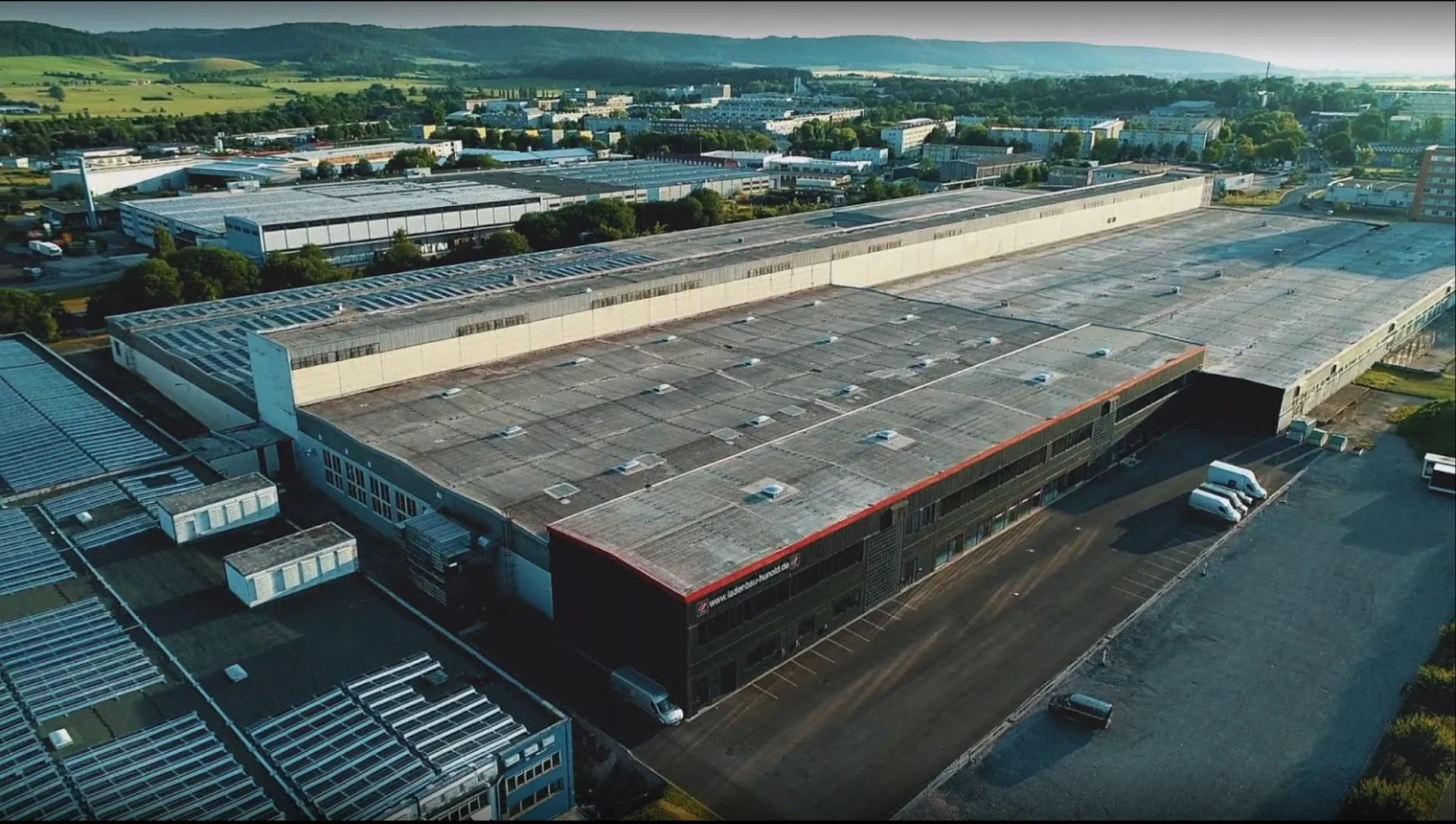
With future energy demand uncertain, GreenCity compared 22 supply concepts for converting a vacant industrial hall into a flexible marketplace. Two promising concepts emerged, with operating-cost savings of up to €790,000 over 10 years for the most efficient configuration. The simulations assessed demand, supply security, CO₂ emissions and investment costs at each expansion stage, providing an energy roadmap for future tenants and uses.
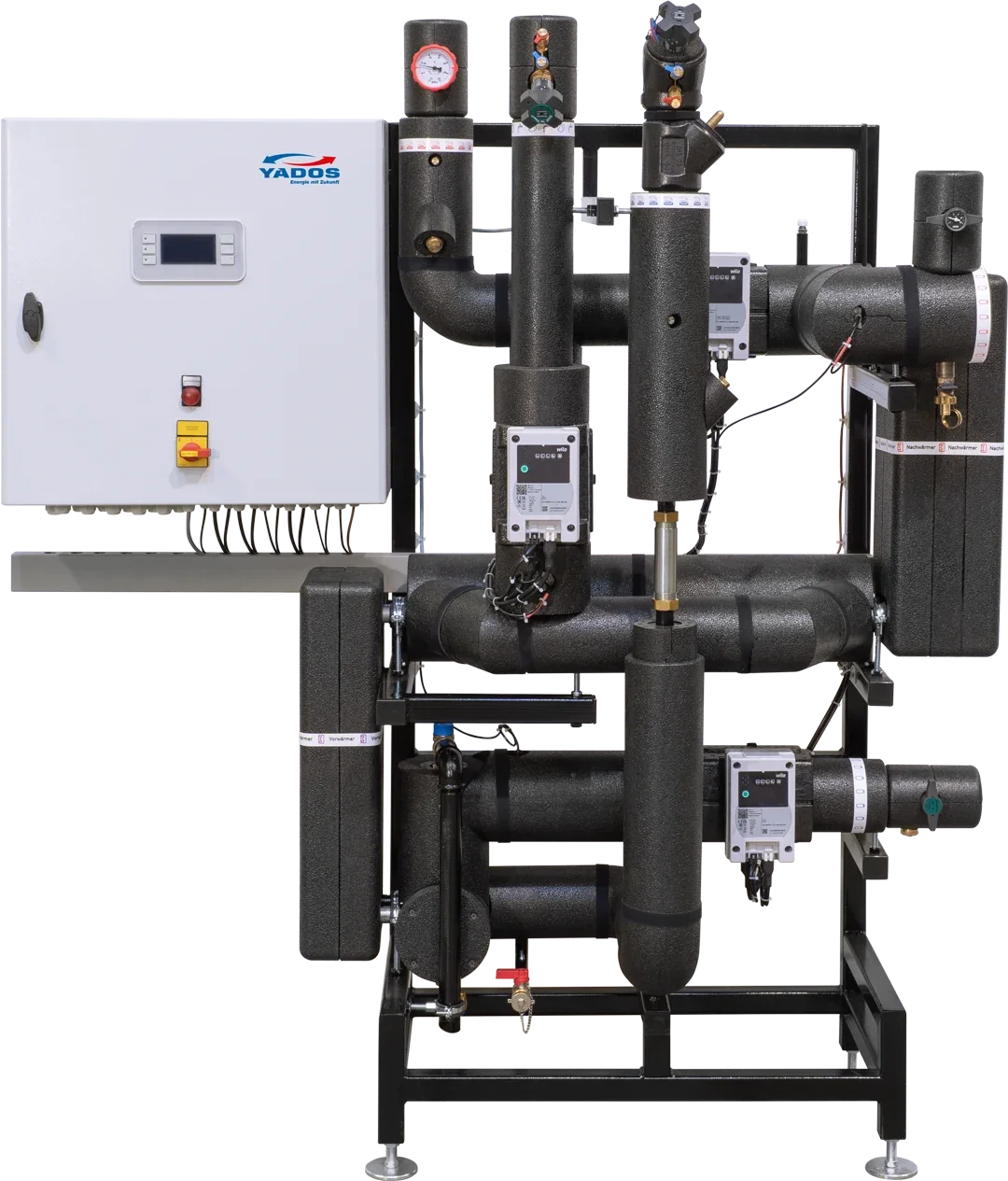
For YADOS, dynamic simulations compared conventional domestic hot water systems with optimized configurations, capturing intermittent demand that static calculations cannot reliably represent. Across load and circulation scenarios, optimized systems achieved lower district heating return temperatures, reaching around 40 °C under favorable conditions. The study quantified part-load effects and circulation losses, helping operators assess efficiency benefits and select configurations for their operating conditions.
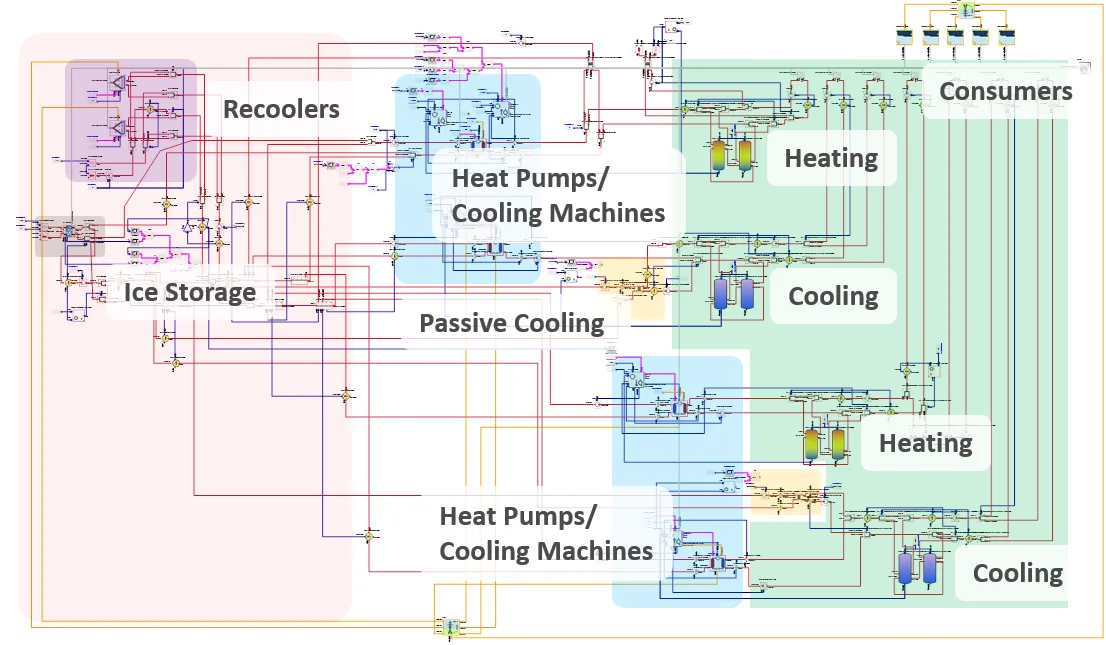
Simulations of a Berlin district evaluated heat pumps, chillers, passive cooling, recoolers and ice storage under current and future extreme weather conditions. The analysis identified oversized ice storage whose costs for storage and housing could have been significantly reduced through earlier optimization. Using the storage for peak load shifting reduced required recooler peak capacity by 25%, saving space and investment costs while improving resilience.
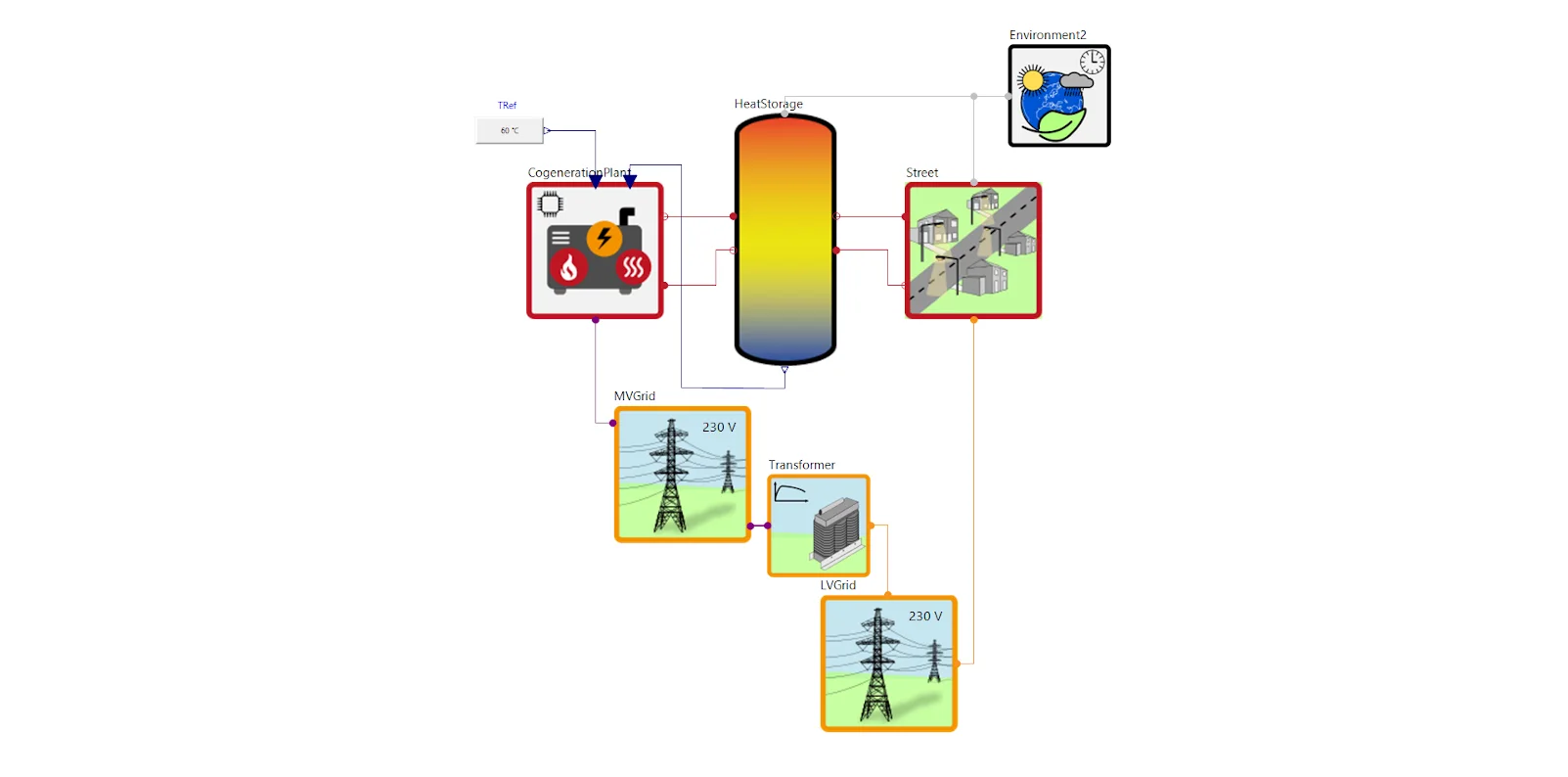
The model shows a simplified heat, warm water and electrical energy consumer which is supplied by a combined heat and power plant. The consumption is defined via timetables. A heat storage serves to buffer load peaks. It can be observed in the simulation that the power plant cannot continuously meet the electrical load without electrical energy storage.
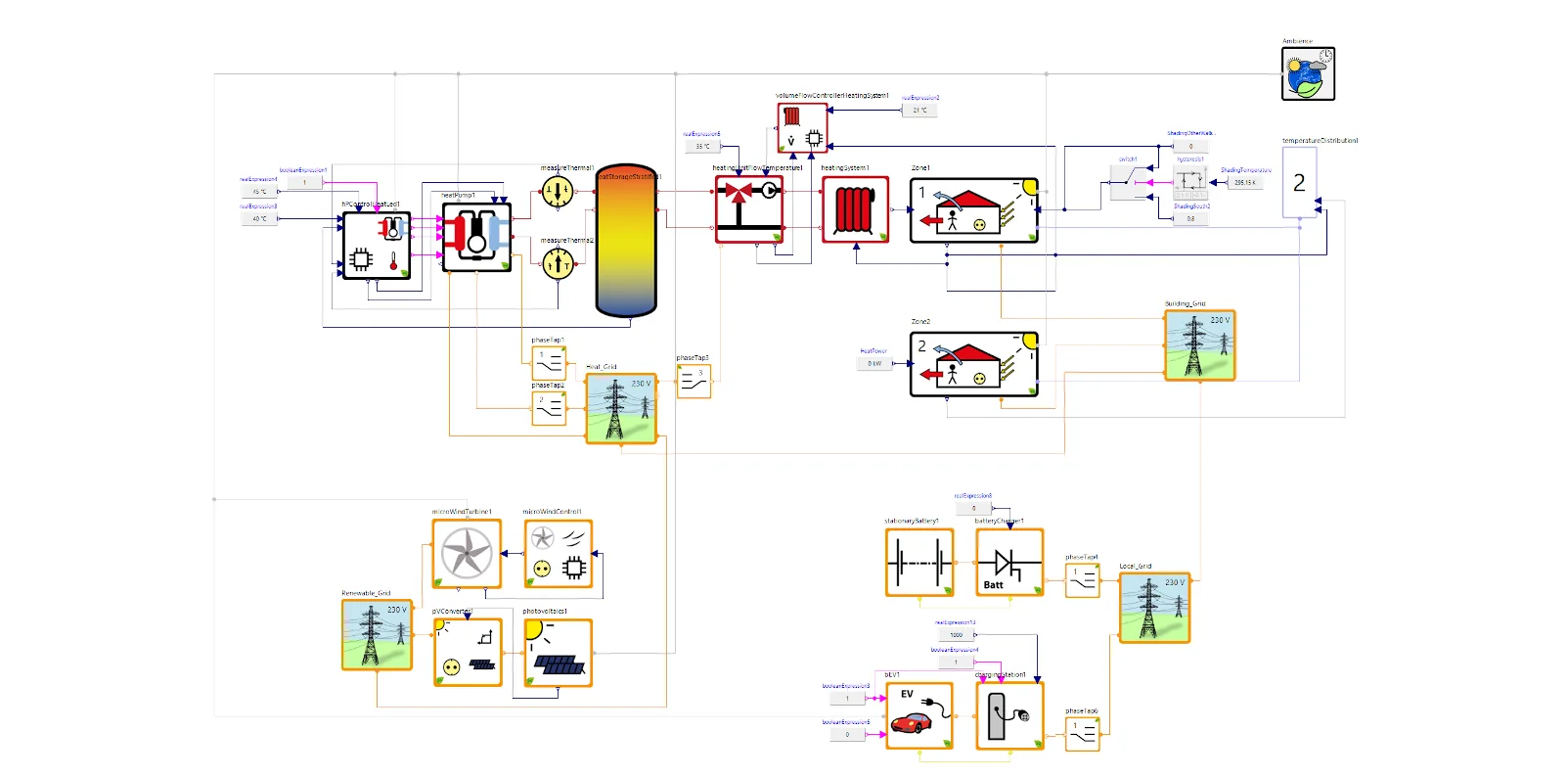
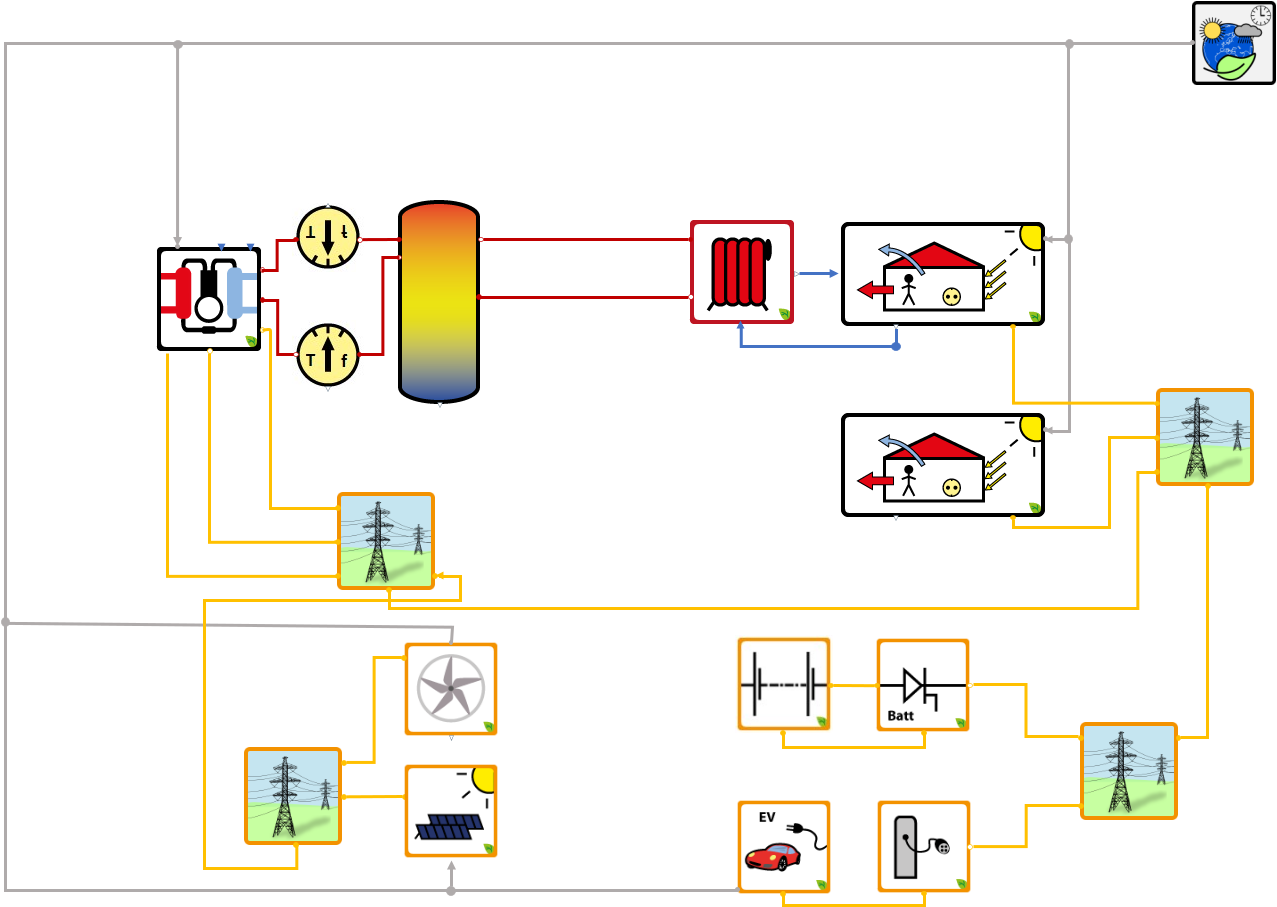
Model of a building with two thermal zones and an electric vehicle including its own charging station and battery. The model calculates the thermal behavior of the building through the balance of all heat quantities (transmission, internal loads, solar radiation). Electrical power is provided by a photovoltaic system and a small wind power plant. An air/water heat pump provides the building with heat.
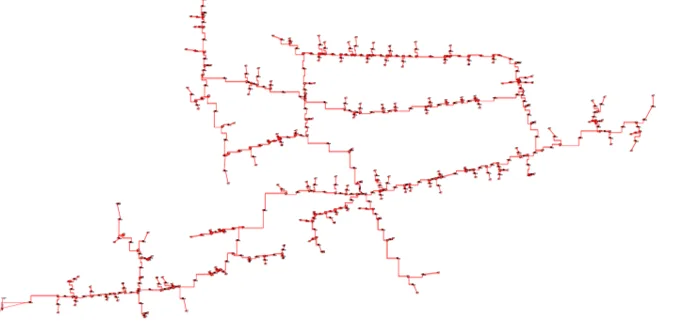
The model represents a district heating grid with all pipes, house connection stations and heat generators. The thermal and hydraulic properties of each component can be simulated in the grid, enabling analysis and optimization of critical grid nodes over the course of a year. This detailed grid model serves as the foundation for all further transformations towards a sustainable district heating grid.